
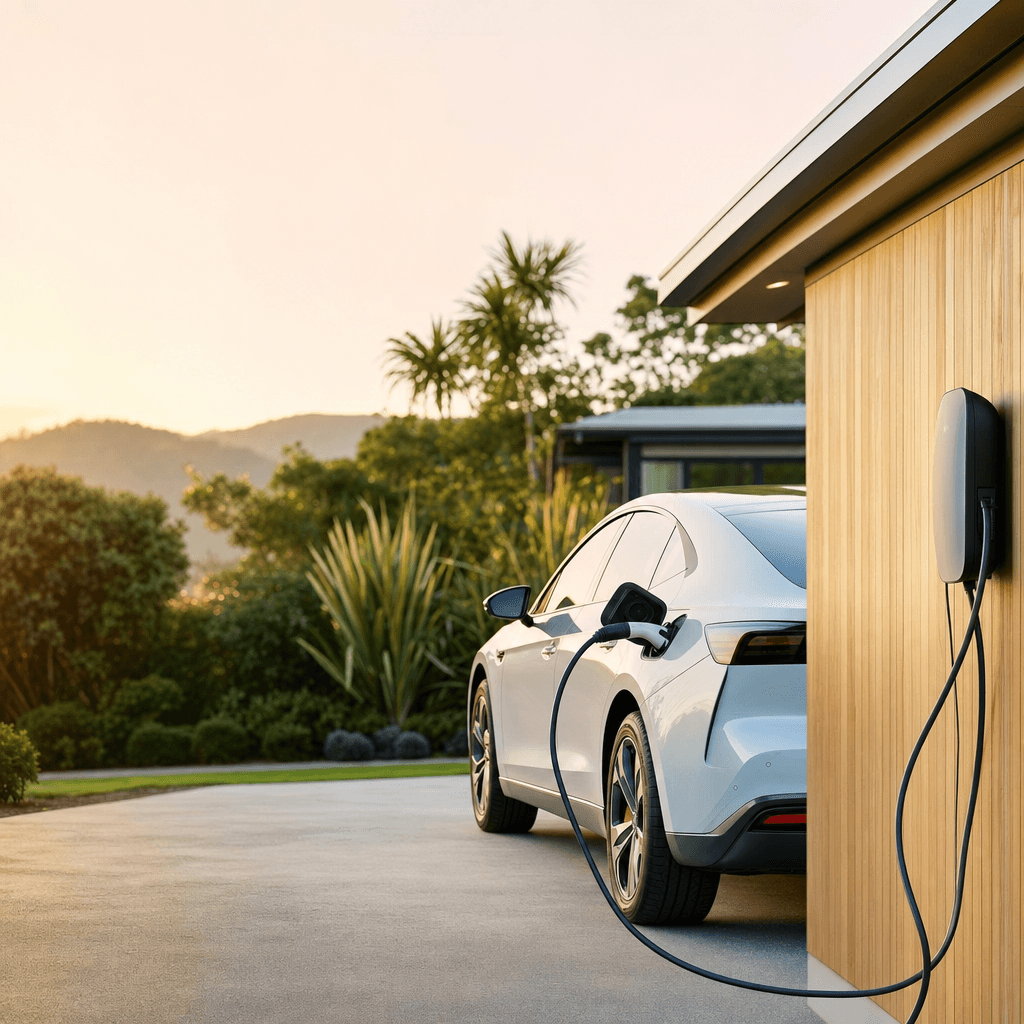
Electric vehicles and plug-in hybrids are now a common sight on New Zealand roads, and for many buyers the question quickly moves from "should I get one?" to "how do I pay for it?". The good news is that financing an EV is, at its heart, much like financing any other car. You take out a secured car loan, the vehicle acts as security for that loan, and you repay it over an agreed term. What changes with an EV is not the loan structure so much as a handful of electric-specific considerations that affect the car's value, its running costs, and how a lender views it. This guide walks through all of it in plain language so you can buy and finance an EV with confidence. It is general information to help you understand your options, not financial advice.
Ready to act on this? Learn more about vehicle finance, estimate repayments with the loan calculator, or start an application.
Financing an EV is much like financing any other car
If you have ever taken out a loan for a petrol or diesel car, the process for an electric vehicle or plug-in hybrid will feel familiar. In nearly all cases you are looking at a secured car loan: you borrow the amount you need, the vehicle itself acts as security for the loan, and you repay it over a set term with regular instalments, often weekly, fortnightly or monthly.
Because the loan is secured against the car, the lender cares about the vehicle's value just as it would with any other car. An EV that is worth more, and that is likely to hold its value, gives the lender stronger security. That is one reason the car's condition and battery health matter, and we cover that in detail below.
Loan terms in New Zealand commonly run from one to five, and sometimes up to seven, years. A longer term lowers each repayment but means you pay more interest overall, while a shorter term costs less in interest but asks more of your weekly budget. There is no single right answer; it comes down to what fits your cash flow comfortably.
Some lenders market a specific "EV loan" or "green" car loan. In practice this is still a car loan. Any difference tends to be in the rate or the marketing rather than the underlying mechanics, so it pays to compare the total cost across several lenders rather than assuming an EV-branded product is automatically the cheapest.
New EV, used EV, or plug-in hybrid: what changes
The type of electric vehicle you choose affects both the price and how it is financed. A brand-new EV costs more upfront but comes with a full manufacturer warranty and a battery in as-new condition, which is reassuring for both you and the lender. A used EV is cheaper to buy and finance, but its history, mileage and battery condition matter far more, because those things drive its value.
Plug-in hybrids (PHEVs) sit in between. They have a smaller battery plus a petrol engine, so they avoid range anxiety while still offering electric-only driving for shorter trips. From a finance point of view a plug-in hybrid is treated like any other car, but it carries its own running-cost and road user charge profile, which we cover further down.
Conventional (self-charging) hybrids, the kind you never plug in, are different again. They run mostly on petrol with battery assistance, so they behave more like a fuel car for both running costs and road user charges. It is worth being clear on which category your vehicle falls into, because the differences are real.
Whichever you choose, the loan itself works the same way. What shifts is the level of due diligence that is sensible before you buy, and that is highest for a used full-electric vehicle.
Battery state of health and why it matters for your loan
The battery is the single most valuable component in an electric vehicle, and its condition is described by its state of health, often shortened to SoH. State of health is a percentage that tells you how much of the battery's original capacity remains. A battery at 100 percent is effectively as-new; one at 80 percent has lost roughly a fifth of its original capacity and therefore a fifth of its usable range.
This matters for financing because the battery's condition directly affects the car's value, and the car's value is what secures your loan. Two EVs of the same model and year can be worth quite different amounts if one has a healthy battery and the other has a degraded one. A higher-mileage EV with a strong battery can actually be a better buy than a lower-mileage example with a tired one.
On some models you can get a rough sense of battery health from the dashboard. Earlier Nissan Leafs, for example, show capacity as a row of bars, where fewer bars means reduced capacity. For a reliable figure, though, a technician connects diagnostic equipment to the car and reads the actual state of health, which is far more accurate than range estimates or guesswork.
As a general rule of thumb, many buyers look for a used EV battery at around 80 percent state of health or above, as this still delivers usable everyday range. The right number depends on the original battery size and how you plan to use the car, but knowing the figure before you commit protects both your money and the security behind your loan.
Check the remaining battery warranty
Most manufacturers provide a separate, longer warranty specifically for the high-voltage battery, over and above the standard vehicle warranty. In New Zealand and globally, EV battery warranties commonly run for around eight years or a set distance such as 160,000 kilometres, whichever comes first. The Nissan Leaf, for instance, has long carried a battery capacity warranty of roughly eight years or 160,000 kilometres, and many Tesla models carry an eight-year battery warranty with a minimum capacity-retention promise.
These warranties usually cover the battery falling below a defined capacity threshold within the warranty period, not simply normal gradual wear. The exact terms vary by brand and model, so always check the specific wording for the vehicle you are looking at.
When buying used, the key question is how much warranty is left. A battery warranty is tied to the vehicle, so a car that is several years old or has covered a lot of distance may have little or no battery cover remaining. That is not necessarily a deal-breaker, but it changes your risk: if the battery does need attention, the cost falls to you rather than the manufacturer.
For an imported used EV, also confirm whether the original warranty applies in New Zealand, as coverage on parallel imports can differ from locally supplied vehicles. Knowing exactly what protection remains helps you judge a fair price, and a fair price means a loan that matches the car's real value.
Get a pre-purchase inspection that includes a battery check
A pre-purchase inspection is sensible for any used car, but for a used EV it is close to essential, and it should go beyond the usual mechanical once-over. A standard inspection checks tyres, brakes, suspension, panel and structural integrity. For an EV you also want the battery's state of health measured properly and the charging system confirmed to be working correctly.
Because so much of an EV's value lives in the battery, a state-of-health read-out is the single most valuable line on the report. It turns the most important and most expensive part of the car from a guess into a known figure, which protects you from overpaying and protects the lender's security.
Use a workshop or inspection service that is genuinely set up for electric vehicles and has the diagnostic tools to read battery health, not just a general mechanic. The modest cost of a proper EV inspection is small next to the price of the car and the size of the loan you are taking on.
If a seller or dealer is reluctant to allow an independent inspection or to share a battery health figure, treat that as a reason to pause. On a purchase of this size, being able to verify the battery before you sign is well worth insisting on.
Running costs: charging versus fuel
One of the main attractions of going electric is lower running costs, and for most drivers charging an EV does work out cheaper per kilometre than buying petrol or diesel, especially when you charge at home overnight on a lower-cost electricity plan. Public fast charging costs more than home charging but is still typically used for top-ups rather than everyday running.
EVs also tend to have fewer moving parts than combustion cars. There is no engine oil to change, no timing belt, no exhaust system and far less to wear out in the drivetrain, which can mean lower routine servicing costs over time. Tyres, brakes, insurance and registration still apply as normal.
These savings matter when you are working out what you can comfortably afford to repay. A slightly higher loan repayment can be offset, in part, by lower fuel and maintenance costs, so it is worth looking at the whole monthly picture rather than the loan repayment in isolation.
That said, do not assume "electric" automatically means cheap to run in every case. Charging costs depend on your electricity plan and how much you rely on public charging, and there is now an additional cost that many newer EV buyers are not expecting: road user charges, which we cover next.
EVs and plug-in hybrids now pay road user charges
This is one of the most important recent changes for anyone budgeting for an electric vehicle in New Zealand. From 1 April 2024, light electric vehicles and plug-in hybrids are required to pay road user charges, known as RUC. The long-standing RUC exemption that EVs previously enjoyed has ended.
Full-electric vehicles pay the standard light-vehicle RUC rate, which has been around $76 per 1,000 kilometres, plus a small administration fee each time you buy a licence. Plug-in hybrids pay a reduced RUC rate, around $53 per 1,000 kilometres, set lower to avoid double-charging them, since they also pay fuel excise duty when they buy petrol.
Conventional hybrids that you never plug in are treated differently. They continue to pay fuel excise duty at the pump and do not buy RUC separately, so the RUC change does not apply to them in the same way.
The practical point is to build RUC into your running-cost estimate from the start. It does not change your loan, but it is a real ongoing cost of EV ownership today, and it slightly narrows the running-cost gap between electric and petrol compared with the pre-2024 picture. Factoring it in gives you a more honest view of what the car costs you each year. Rates and admin fees can change over time, so check the current figures with the NZ Transport Agency.
Depreciation and how an EV holds its value
Depreciation, the drop in a vehicle's value over time, applies to EVs just as it does to petrol cars, and it is worth understanding because it affects both your equity in the car and the lender's security. With electric vehicles, depreciation is driven heavily by battery condition and by how quickly newer models with longer range arrive on the market.
A brand-new EV typically takes its sharpest value drop in the first couple of years, the same as any new car. Buying a well-cared-for used EV lets someone else absorb that initial hit, which is part of the appeal of the used market. The trade-off, as covered above, is that you take on more responsibility for verifying battery health.
Because battery health is so closely tied to resale value, looking after the battery, by avoiding constant fast charging and not routinely charging to 100 percent where the manufacturer advises against it, can help an EV hold its value better over the life of your loan.
Being aware of depreciation also helps you avoid ending up "upside down", where you owe more on the loan than the car is worth. Choosing a sensible loan term and a reasonable deposit, where you can, keeps your loan tracking closer to the car's real value over time.
Rates, approval and responsible lending in New Zealand
The interest rate you are offered and whether your application is approved come down to lender criteria, not to the fact that the car happens to be electric. Lenders look at factors such as your income and expenses, your credit history, the size of your deposit, the loan term, and the age and value of the vehicle. A strong credit history and a healthy budget surplus generally support a better rate, while past credit problems can make approval harder or push the rate up.
All consumer lenders in New Zealand operate under responsible lending obligations. In practical terms, a lender is required to make reasonable inquiries to satisfy itself that the loan meets your needs and that you can make the repayments without suffering substantial hardship. That is why you will be asked for proof of income, details of your expenses, and identification as part of the process.
No reputable lender can promise guaranteed approval, and you should be cautious of anyone who claims to offer finance with no credit checks. Responsible lending checks exist to protect you, and they are a normal, healthy part of borrowing. Approval and rates are always subject to the lender's assessment and criteria.
Because criteria and pricing differ from one lender to the next, the same buyer and the same EV can attract quite different offers. Comparing across multiple lenders is the most reliable way to find a competitive deal for your situation.
How Udrive can help you compare EV finance
At Udrive we are a vehicle finance broker, which means that rather than lending you the money ourselves, we compare car finance options from a range of New Zealand lenders, including finance for electric vehicles and plug-in hybrids. Our role is to help you understand your options and find a loan that suits your needs and budget.
Because we work with multiple lenders, we can match your circumstances to the criteria of different funders rather than you applying to each one yourself. We can talk you through what an EV loan involves, how deposit and term affect your repayments, and what to have ready when you apply.
All lending is still subject to each lender's criteria and responsible lending checks, and approval and interest rates depend on your individual situation. We cannot promise a particular rate or guarantee approval, but we can make comparing your options far simpler. If you are weighing up an electric vehicle, get in touch and we will help you understand the finance side so you can focus on choosing the right car.
This guide is general information, not financial advice. Any finance is provided by a lender and is subject to lender criteria, affordability, and responsible lending checks. Approval is never guaranteed.